



Best Places to Teach English in Portugal for 2026
Page Contents:
- Why Portugal is the TEFL Hotspot for 2026
- Top Cities to Teach English: The 2026 Shortlist
- Government Programmes & Public Schools
- Snapshot: Salaries, Visas, and Requirements
- Types of Schools & Qualifications Needed
- Visas: EU vs Non-EU (USA, UK, Canada)
- School Terms & When to Apply
- Cost of Living: Reality Check
- Future-Proof Your Career with TEFL Explorer
Portugal has firmly established itself as one of the most desirable destinations for TEFL teachers in Europe. As we move into 2026, the allure of this Atlantic gem hasn’t faded; if anything, it has evolved. With the introduction of more accessible visa routes for non-EU citizens and a booming digital economy, Portugal offers a unique blend of traditional teaching roles and modern flexibility.
Whether you are drawn to the cobbled streets of Lisbon, the wine cellars of Porto, or the sun-drenched coast of the Algarve, teaching English here allows you to immerse yourself in a culture that values work-life balance, gastronomy, and hospitality. But where exactly should you go? And how do you navigate the administrative hurdles of 2026? Let’s dive in.
Why Portugal is the TEFL Hotspot for 2026
Unlike the saturated markets of East Asia or the Middle East, Portugal offers a lifestyle-first approach. You generally won’t make a fortune here compared to Dubai or Seoul, but the trade-off is an exceptionally high quality of life. In 2026, demand for English remains robust, driven by tourism, the tech sector, and a population eager to remain competitive in the global market.
For graduates of TEFL courses, Portugal serves as a fantastic entry point into the European teaching market. The students are generally well-behaved, eager to learn, and the culture is incredibly welcoming to foreigners.
Top Cities to Teach English: The 2026 Shortlist
1. Lisbon: The Cosmopolitan Hub
As the capital, Lisbon naturally has the highest concentration of language schools, international schools, and universities. It is the country’s economic engine. For teachers, this means more job offers and higher salaries compared to the rest of the country. However, in 2026, the Lisbon housing market remains competitive. Teachers here often supplement their income with private tutoring or online teaching.
Best for: Teachers who crave city life, nightlife, and a large expat community.
2. Porto: The Cultural Soul
Portugal’s second city is famous for its bridge, its wine, and its stunning riverside district. Porto has seen a surge in demand for business English as more international startups have headquarters there. The cost of living is slightly lower than in Lisbon, though the gap is closing. Porto offers a slightly more relaxed pace but with plenty of academic prestige.
Best for: Those who want a vibrant city feel without the chaotic rush of a capital.
3. Coimbra: The Academic Heart
Home to one of Europe’s oldest universities, Coimbra is steeped in academic tradition. If you have a background in Academic English or exam preparation (IELTS/Cambridge), this is your haven. The student population is huge, meaning private tutoring opportunities abound.
Best for: History buffs and teachers preparing for exams.
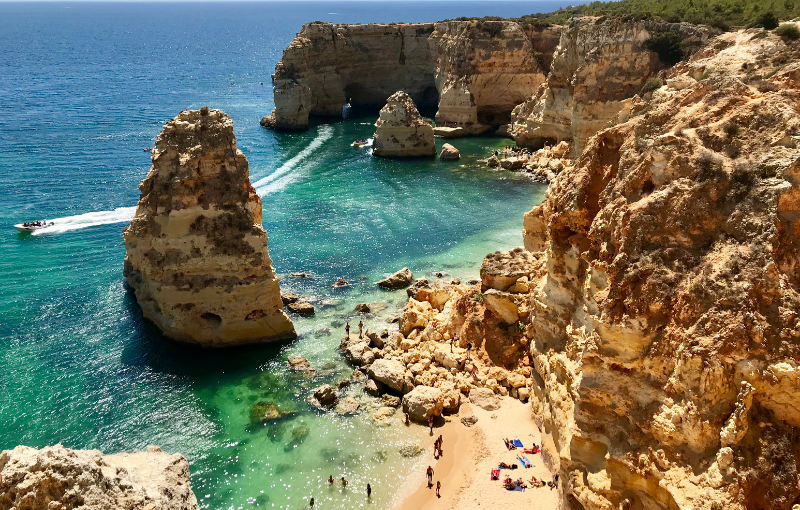
4. The Algarve: Sun, Sea, and Seasonal Work
If your goal is to spend your weekends surfing or lounging on the beach, the Algarve is the place. Teaching jobs here are more seasonal, revolving around the tourism industry. Many hotels and tourism boards hire English trainers for their staff. It is quieter in the winter, so budget management is key.
Best for: Outdoor enthusiasts and those looking for a slower pace of life.
5. Braga & Guimarães: The Northern Contenders
Often overlooked, these northern cities are young, dynamic, and significantly cheaper than Lisbon. Braga has a massive university population and a tech-forward approach. For teachers looking to save money while enjoying a distinctly Portuguese experience, these are the hidden gems of 2026.
Government Programmes & Public Schools
Unlike Spain, which has the famous “Auxiliares de Conversación” programme, Portugal does not have a massive, centralised government recruitment scheme for foreign English teachers. However, there are specific avenues to explore:
- AEC (Atividades de Enriquecimento Curricular): These are after-school enrichment activities in public primary schools. While not always advertised as a “national programme” for foreigners, local municipalities often hire English teachers for these slots. It is a great way to get into the public system, though contracts are often part-time.
- Fulbright English Teaching Assistant Program: For USA citizens, this is the gold standard. The Fulbright Commission in Portugal places American citizens in higher education institutions to assist with teaching. It is prestigious and competitive.
- Direct Public School Hiring: This is difficult for non-EU citizens as you typically need to pass a national exam (Concurso Nacional) and have your qualifications recognised as equivalent to a Portuguese teaching degree.
For most TEFL teachers, the private sector remains the primary employer.
Snapshot: Salaries, Visas, and Requirements
Quickly compare what you need to know about teaching in Portugal in 2026.
| Institute / Sector | Average Salary (Monthly) | Demand (2026) | Visa (EU Citizens) | Visa (USA/Non-EU) | Best TEFL Course | Degree Required? |
|---|---|---|---|---|---|---|
| Private Language Institutes | €800 – €1,200 | High | None (Residency Cert.) | Work Visa / Job Seeker | 120-Hour Premier TEFL | Preferred, not always mandatory |
| International Schools | €1,600 – €2,800+ | Moderate | None | Sponsored Work Visa | Level 5 Diploma | Yes + PGCE/QTS often required |
| Universities | €1,200 – €2,000 | Low (Niche) | None | Work Visa / D3 (Tech/High Qual) | Masters / Delta | Yes (Master’s/PhD) |
| AEC (Public Primary) | €10 – €15 per hour | Moderate | None | Difficult to sponsor | 120-Hour + Young Learners | Yes |
| Online / Freelance | Varies (€15-€25/hr) | Very High | None | D8 (Digital Nomad) | Level 5 Diploma | No |
Types of Schools & Qualifications Needed
When searching for a job in TEFL. i.e Jobs Board, you will likely encounter three main categories of employers.
1. Private Language Academies
The Vibe: These are businesses catering to after-school kids and professionals. Hours are often late afternoon to evening (e.g., 4 pm to 9 pm).
The Requirements: A 120-hour TEFL certificate is the standard here. A degree is highly preferred for work permit purposes if you are non-EU, but EU citizens can sometimes find work without one if they demonstrate native-level fluency.
2. International Schools
The Vibe: These schools follow either a British or an American curriculum. They pay the best but expect the most.
The Requirements: You usually need to be a fully qualified teacher in your home country (PGCE, B.Ed, or state licensure). A standard TEFL certificate alone is rarely enough, although a Level 5 Diploma can help as a top-up.

3. In-Company / Business English
The Vibe: Travelling to offices to teach staff. High flexibility is needed.
The Requirements: Smart presentation and a background in business help. A specialist Business English TEFL course is a massive advantage here.
Visas: EU vs Non-EU (USA, UK, Canada)
Navigating Portuguese bureaucracy is a rite of passage. Here is the 2026 breakdown:
For EU Citizens (including Irish)
You have it easy. You do not need a visa to work. However, if you stay for more than 3 months, you must register for a residency certificate (Certificado de Registo) with the local council (Câmara Municipal). You will also need a NIF (Tax Number) and a Social Security number (NISS) to get paid.
For USA, UK, and Non-EU Citizens
Since Brexit and the tightening of borders, planning is required. Portugal, however, is one of the most open countries in Europe.
- The Job Seeker Visa: Introduced recently, this allows you to enter Portugal specifically to look for work for 120 days (renewable by 60 days). If you find a job, you can convert this to a residence permit.
- D8 Digital Nomad Visa: If you plan to teach English online for companies based outside Portugal (like Chinese or Latin American platforms) while living in Lisbon, this is your golden ticket. You need to prove a specific monthly income (usually 4x the minimum wage).
- D7 Visa: Mostly for passive income, but some freelancers use it if they have a stable, recurring income.
- Standard Work Visa (D1): This requires a company to sponsor you before you arrive. This is harder to get for entry-level TEFL jobs, but common for International Schools.
School Terms & When to Apply
Timing is everything in the TEFL world.
- Academic Year: Runs from mid-September to late June.
- Peak Hiring Season: Late May to July is the prime time to secure a contract for the following September.
- Secondary Hiring Season: January. There is often a mini-hiring spike to replace teachers who leave after the Christmas break.
- Summer Camps: Recruitment usually starts in March/April for July/August camps.
If you are looking for work in private language academies, start sending CVs in June. Many Directors of Studies go on holiday in August, so don’t expect many replies then!
Cost of Living: Reality Check
While Portugal is affordable, 2026 prices are not what they were ten years ago. Rents in Lisbon have skyrocketed. It is vital to negotiate your salary or ensure you have savings.
- Rent (Shared Apartment): €400 – €600 (Lisbon), €300 – €450 (Porto/Other).
- Groceries: Very affordable. €200 per person per month is reasonable if you cook at home.
- Transport: A monthly metro pass is usually under €40, which is excellent value.
- Dining Out: You can still get a “Prato do Dia” (Dish of the Day) lunch with coffee for €10-€12.
Is it easy to find a job?
Yes, if you are proactive. Portugal relies on English for tourism, so the demand is constant. However, “passive” applying rarely works. You need to be persistent.
Best Places to Search:
- TEFL.ie Jobs Board: We curate lists of trusted employers.
- Net-Empregos: A local Portuguese job board (use Google Translate).
- LinkedIn: Essential for corporate teaching jobs.
- Direct Contact: Find a list of schools in your target city and email your CV and cover letter to each school.

Future-Proof Your Career with TEFL Explorer
Entering the job market in 2026 requires more than just a certificate; it requires smart tools. This is where TEFL Explorer comes in.
Developed by the TEFL Institute, TEFL Explorer is an AI-powered ecosystem designed to support you from study to classroom. It offers:
- AI Lesson Planning: Create a full lesson plan for a Portuguese A2 class in seconds.
- Job Match Technology: It analyses your profile against global job listings to find the best fit for your visa status.
- Resource Library: Access thousands of grammar guides and worksheets.
Take the Next Step
Ready to start your Portuguese adventure? Check out the advanced features of the TEFL Explorer and see how it can simplify your move abroad. Don’t forget to visit our sister site, The TEFL Institute, for even more global opportunities.
Portugal awaits. With the right qualification from TEFL.ie and a bit of adventurous spirit, 2026 could be the year you trade the grey skies for the golden coast.


- Career Centre
- Featured
- Job Advice
- Other Topics
- Our Charity Partnership
- Teacher's Stories
- Teaching English
- Teaching English in Asia
- Teaching English in Europe
- Teaching English in South America
- Teaching English in Spain
- Teaching English Online
- Teaching resources
- TEFL Advice
- TEFL Courses
- TEFL in Spain
- TEFL Jobs
- TEFL Stories
- The Hope Foundation
- Transition Year
- Travel Articles
Recommended Reading

Pros & Cons of Teaching English Online
Read more →
Online English teaching jobs, a new career in 2026
Read more →
Top Destinations to Teach English in Europe for 2026: Complete Salary & Visa Guide
Read more →Internationally Accredited & Recognised




TEFL Institute Salary Calculator
Curious about your earning potential as an online English teacher?
Take our quick quiz to estimate your TEFL salary and see what you could earn!

Got Questions?
Get clear answers about TEFL courses, certification, teaching jobs, and everything in between.


Some of the most popular destinations for English teachers in Portugal include Lisbon, Porto, the Algarve, and Madeira. These regions have high demand for English instruction, diverse expat communities, and strong job opportunities in language schools and private tutoring.
Yes, most English teaching jobs in Portugal require a TEFL (or CELTA/TESOL) qualification, particularly for private language schools and international programmes. A 120-hour TEFL certificate is widely accepted and helps you stand out to employers.
Yes. EU citizens can live and work in Portugal without a visa. Non-EU citizens must obtain a valid work visa or residence permit before beginning employment. Employers usually assist with visa requirements during the hiring process.
English teacher salaries vary by location and type of job. In private language schools and academies, pay often ranges between €900–€1,500 per month, with higher rates for experienced teachers or specialised roles such as business English. Freelancers and private tutors can earn more, depending on hours and demand.
Common English teaching roles in Portugal include:
• Private language schools
• Corporate English training
• IELTS/TOEFL prep classes
• Private/tutoring work
• Online English teaching
Public school positions may require additional EU-recognised teaching credentials.
No, Portuguese is not usually required to teach English, especially for language schools and tutoring positions. However, basic Portuguese can help with daily life, cultural integration, and building professional networks.
Yes. Portugal’s growing emphasis on international education, increasing tourism, and demand for English proficiency make it a strong destination for TEFL teachers in 2026. Its vibrant culture, quality of life, and relatively low cost of living also make it appealing for expats and remote workers.
You can find English teaching jobs in Portugal through:
• TEFL job boards (e.g., TEFL.ie Jobs Board, GoAbroad)
• Language school websites in Lisbon, Porto, Algarve, and Madeira
• LinkedIn and local teaching groups
• Networking with expat and English teaching communities
