


The Transition Year programme, from the student side.
Ten assessed modules, 120 hours and a qualification that is still worth something at twenty two. This is what the work actually looks like, what gets handed in, and where it leads once Transition Year is over.
Yours to do in your own time, and a focused student can be finished in about three weeks.
It counts as a Transition Year project, and it counts again on a CV years later. More about the course overall.
How the pace works
Three ways to fit it in, and all three are fine.
It is 120 hours and it is self paced, so the speed is your decision rather than the timetable’s. These are the three shapes it usually takes.
Flat out
Three weeks, if you want it done before the exams. That means the TY slot plus a few hours at home, and it is how a focused class clears the ten modules quickest.
Weekly
One slot a week across a term, which is what most classes do. Nothing is lost by taking longer, and the certificate at the end is identical.
Your own time
Nine months of access, on a laptop, a school computer or the app. Stop for the mid term or for a match weekend and pick up exactly where you left off.
For students
Online courses for Transition Year, from the student side.
Five real decisions from the grammar and classroom management modules. Not a personality quiz. Get one wrong and you will still learn something, which is rather the point.
The sixty second taster
Five questions from the real modules.
Where it could take you
Three honest routes, with the rules attached rather than left out.
Tutoring, camps and volunteering, at home
Summer English camps in Ireland take on young assistants, and one to one grinds in English are the most common paid work a sixteen year old with a teaching qualification actually gets.
- You can hold the certificate at sixteen. What changes with age is what you can do with it.
- Anyone working with under eighteens in Ireland goes through Garda vetting, arranged by the employer.
Teaching English abroad
The certificate is the entry requirement almost everywhere. It is the single most portable thing a school leaver can carry into a year away.
- Paid teaching abroad almost always needs you to be eighteen.
- A great many countries also require a degree for the work visa, so this is often a post college route rather than a post school one.
- Online teaching and volunteer placements have the fewest barriers.
Teaching, speech and language, linguistics, aid work
Students who take this in TY turn up disproportionately in education, languages and social care courses afterwards. Having stood in front of a class at sixteen is a reason to pick a degree, or a reason to rule one out, and both are useful.
- A TEFL certificate carries no CAO points and no UCAS tariff points. Nobody should take it expecting either.
- What it gives you is something concrete to write about and to talk about at interview.
Four short add ons, matched to TY pathways
Fifteen euro each, and each one points at a subject choice a student is already weighing up.
TEFL for the Digital Classroom
For the student leaning towards digital media, computer science or an enterprise project.
Early Years TEFL Teacher
For anyone thinking about childcare, primary teaching or social care.
TEFL Grammar Guru
For the languages and linguistics crowd, and for anyone who wants their own grammar to stop being guesswork.
Breathe and Teach
English through mindfulness. For students looking at psychology, wellbeing or SPHE as a pathway.
Certificate day
TY courses for students, in real Irish schools.
These are Transition Year students in Irish schools on the day their certificates arrived. Same course, same ten modules, different rooms.
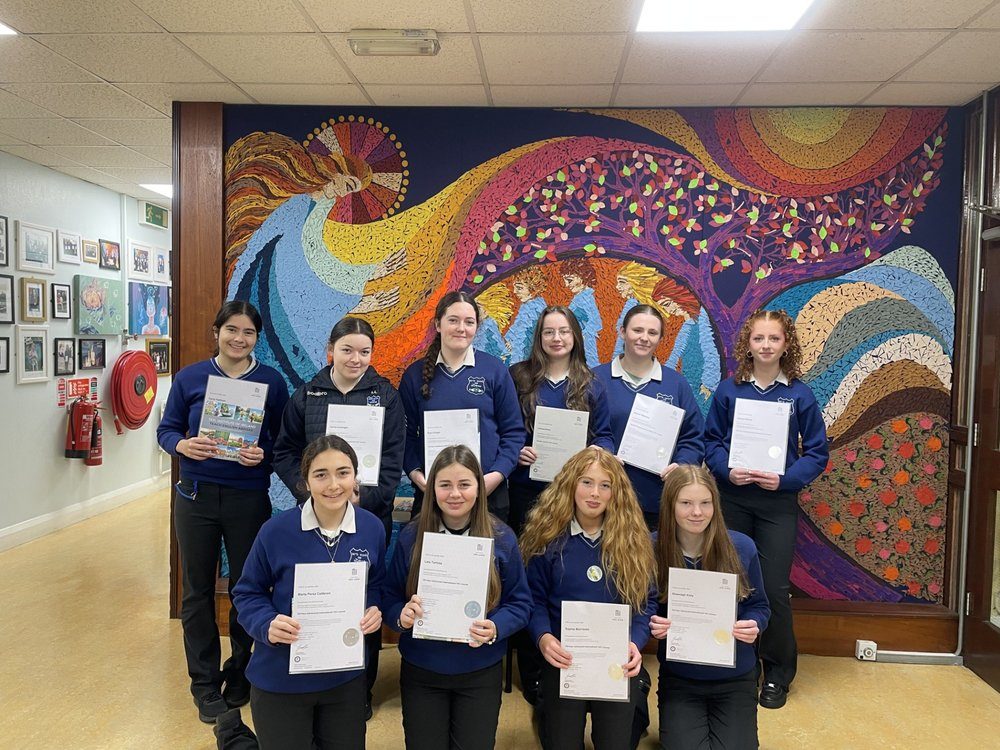
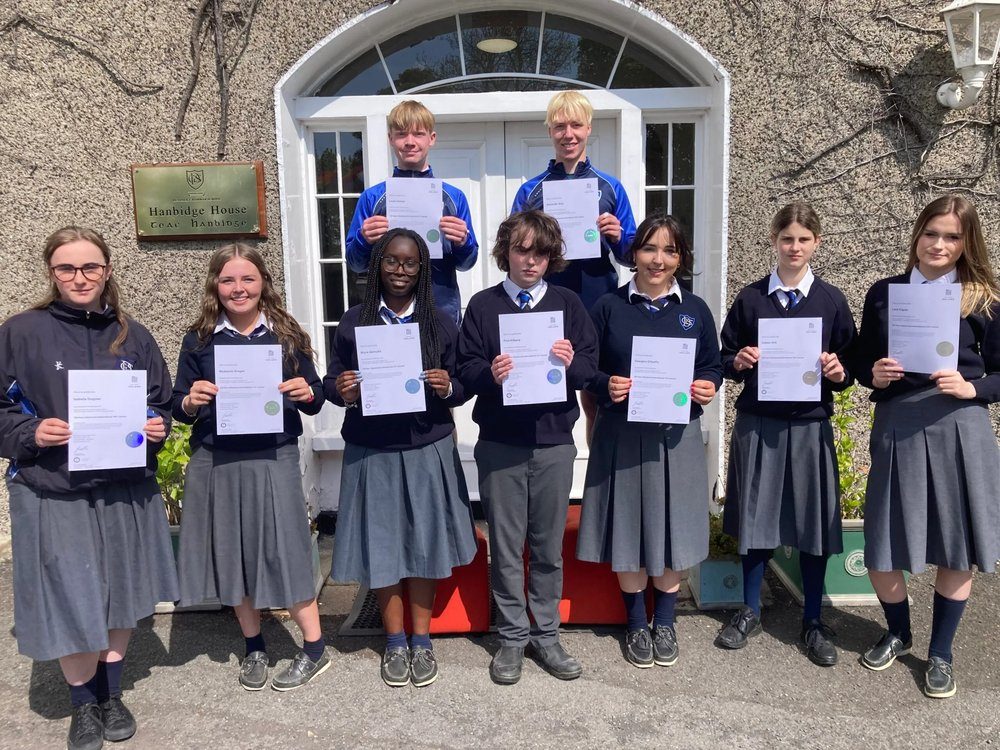
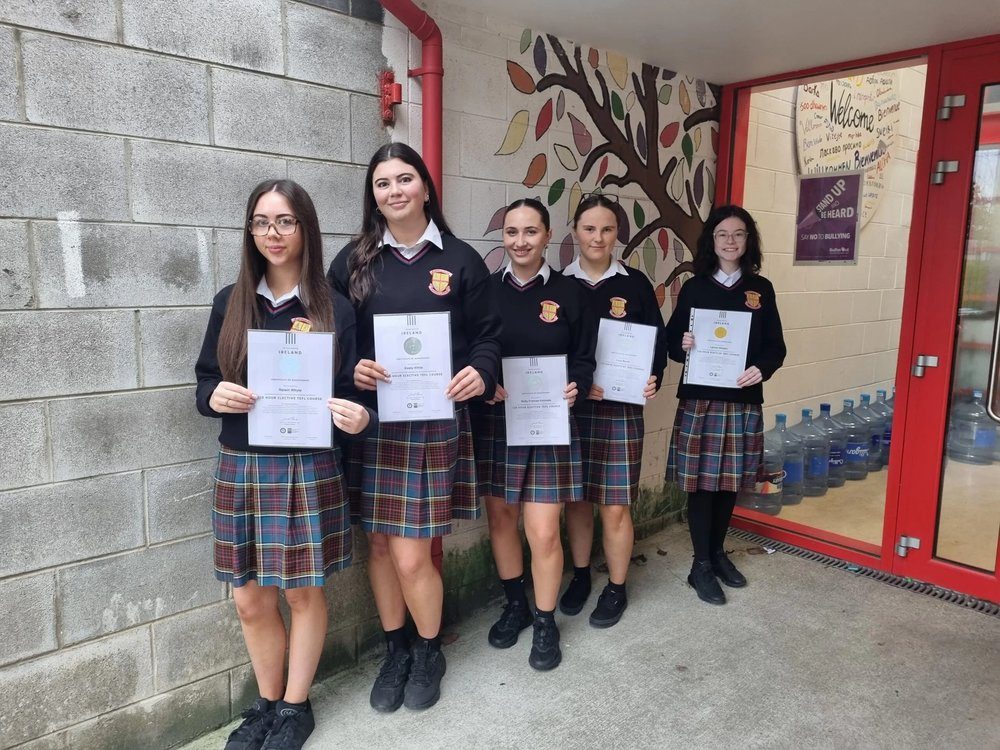
Photographs supplied by partner schools and used with their permission.
Life skills and wellbeing
TY life skills courses, and where this one differs.
Most TY life skills courses are built and run in house, and they are often the best weeks of the year. We are not trying to replace them. It is worth being straight about what each is for.
What life skills modules do well
Cooking, budgeting, first aid, driver theory, public speaking, mental health and wellbeing. They are cheap to run, easy to move around a timetable, and they are about the person rather than the grade. Nothing here is a substitute for any of that.
What they rarely leave behind
Very few end with something external. A student finishes the year having genuinely grown, but with nothing they can put on a CV, a CAO personal statement or a job application two or three years later when it would actually be useful.
Where this sits
This is a life skills course that happens to end in a regulated qualification. Standing in front of a room and explaining something to a person who does not yet understand it is public speaking, patience and planning at the same time. The difference is that the paperwork outlives the year.
For the TY portfolio
Using it as a Transition Year project.
Transition Year projects need three things: something the student does, something they can show, and something they can stand up and talk about. A course with ten assessed modules and a dated certificate gives you all three without you having to design the project from scratch.
What the student hands in
Ten completed module assessments, a completion record with dates against each one, and an externally awarded certificate in their own name. That is the evidence half of a TY project already finished, and it is per student rather than per group.
What they present
If you want a spoken element, the simplest one we suggest is a ten minute lesson taught back to a first year class or a language group, planned using the lesson planning module. It is the part parents remember at the showcase, and it is the part students are nervous about right up until they have done it.
Where it counts twice
We are a Gaisce challenge partner, so the same hours can sit in a President’s Award personal skill log. One block of Transition Year time then produces a qualification, a portfolio entry and progress towards a national award.
Interactive · after the certificate
The part that starts the day the course ends.
Most TY programmes stop at the certificate. This is what a student still has access to in fifth year, in sixth year, and in the gap year after it. Tap any step to open it.
One email with a code. Students enrol themselves with their school address, so there are no lists to compile and no logins to hand out. You can see who has started by the end of the first week.
Video, reading and a short assessment at the end of each module. Assessors mark the written work, not you. A focused class gets through it in three to four weeks; most take a term and that is fine.
A personalised digital certificate with the student’s name on it, plus a reference letter from us. Hard copies are available for schools that want something to hand over at an awards night.
The account does not close. Students who come back in fifth or sixth year still have the course materials, and the alumni area is where they find out what the certificate is actually worth.
A live board of TEFL vacancies, and the careers and skills webinars we run in September, October, November and January. Students can join those long after TY has finished.
When a student is genuinely applying for work abroad, they can come back to us for help with the application, the CV and the interview. That is the part that separates a certificate from a programme.
In their own words
Students who have already done it.
Real reviews, left by Transition Year students in Irish schools, quoted exactly as written.
My experience was 10/10 on this course as it was so easy to follow at your own pace. The course is so flexible and gives you so many helpful links which is such a nice touch as well.
Great qualification that allows you explore different cultures while teaching and interacting with many different nationalities and personalities and even children with different needs and abilities.
The assessments were very rewarding and I liked doing them as they gave me a sense of achievement.
Great source of learning and has provided me with a qualification that will unlock endless opportunities for me.
Next step
Ask about doing it in your school.
Schools book this as a group, so the enrolment usually goes through your Transition Year coordinator rather than through you directly. Here is how it works from where you are standing.
Send them the page written for schools. It has the pricing tiers, the timetable planner and the answers to what they will ask first, so they can decide without a phone call.
If you are a parent, or a student whose school has not looked at it yet, send us an enquiry and we will come back to you with what it would involve.
Once your school is set up you get a code, you enrol yourself online with your school email, and the ten modules are yours to work through at your own pace.