


Best Transition Year Courses in Ireland: Why Choose a TEFL Course?
Every Transition Year coordinator wants to offer a programme that feels fresh, meaningful and memorable. Students look forward to TY as “a year out” from exam pressure. Parents hope it will build maturity, confidence and direction. Schools need to balance all of this with timetables, resources and inspection frameworks. The result is a Transition Year landscape in Ireland that is rich and varied – but also competitive.
When you search for the best Transition Year courses in Ireland, you see everything from enterprise and coding to Gaisce challenges, drama, outdoor pursuits and language exchanges. Each has its place. Yet an increasing number of schools are now adding accredited, online options that give students a qualification they can carry for life. One of the most distinctive of these is a TEFL (Teaching English as a Foreign Language) course tailored for Transition Year. For online options specifically, see our round-up of the best online TY courses.
This article looks at how TEFL sits alongside the most popular TY courses and why it deserves a place near the top of your list when you are reviewing or redesigning your TY programme.
Table of Contents
-
What Makes a Great Transition Year Course?
-
Popular Transition Year Courses in Ireland
-
Where TEFL Fits Among the Best TY Options
-
Why an Online TEFL Course Stands Out
-
Comparing TEFL with Other Leading TY Courses
-
How TEFL Fits into Your School’s TY Programme
-
Why TEFL Belongs on Any “Best TY Courses in Ireland” List
-
Next Steps: Explore TEFL for Your Transition Year
What do the “best” Transition Year courses have in common?
“Best” can mean different things to different schools. For some, it’s about student enjoyment; for others, it’s about measurable outcomes. In practice, the strongest Transition Year courses and electives in Ireland tend to share several traits.
They help students step outside the usual classroom rhythm and experience new ways of learning. That might involve project work, enterprise, community engagement or outdoor activity. Crucially, students feel they are doing something different, not just repeating Junior Cycle in a looser format.
They also support the core aims of TY: personal development, social awareness and work‑related learning. Whether a course focuses on business, volunteering or creative arts, it should help students see themselves as more independent, capable and connected to the wider world.
The best TY courses are manageable for schools. They fit into real timetables, don’t rely on a single staff member’s personal passion, and don’t create excessive admin. When teachers leave or roles change, the course should still be deliverable.
Finally, there is a growing expectation that Transition Year should lead to clear outputs. Parents and students increasingly ask: what will I have to show for this year? That might be a portfolio, a completed project, or ideally, a recognised certificate or qualification. Courses that combine engagement with a concrete, credible outcome are the ones that stand out.

A quick tour of popular Transition Year courses in Ireland
Across Irish schools, several categories of TY course appear again and again. Understanding where TEFL fits is easier when you see the broader picture.
Many schools run enterprise or mini‑company programmes. These give students a taste of setting up a business, managing money and working in teams to create a product or service. Others prioritise work experience blocks, allowing students to try different sectors and build early contacts.
Creative and performing arts are another pillar: drama, film, music and visual arts projects offer space for expression and collaboration. Sports leadership courses, outdoor pursuits and adventure weeks address physical wellbeing, resilience and teamwork.
There are also skills‑based courses such as coding, first aid, digital media, driving theory and culinary arts. These often involve external providers and give students a specific skill set in a short, intensive format.
Overlaying all of this is the TY programme structure each school develops: some run a carousel of short modules; others prefer longer, term‑long courses. Within that structure, schools now look for at least one or two electives that give students a credential they can talk about in interviews and applications. That’s the space where TEFL has become a compelling option.
Where TEFL sits among the best TY course options
TEFL, Teaching English as a Foreign Language, is often associated with graduates teaching abroad. But when adapted for Transition Year, it becomes a school‑friendly way to give students global skills, communication confidence and a recognised qualification.
An online TEFL course designed for TY students introduces them to the basics of teaching English to non‑native speakers. They learn how to plan lessons, explain grammar, manage a classroom and support learners from different cultural backgrounds. Unlike a casual workshop, this is a structured course with clear modules, assessments and certification.
Placed alongside other top TY courses, TEFL has a distinctive profile:
-
Like enterprise programmes, it encourages independence and responsibility, but it focuses on communication, language and global awareness rather than business.
-
Like work experience, it gives students insight into a real career path – in this case, teaching, training and education – without relying on placements.
-
Like skills‑based courses, it leads to a concrete qualification, but one that is recognised internationally rather than tied to a single provider or niche skill.
For many schools, this combination makes TEFL a natural complement to their existing TY offer: a course that looks and feels different from core subjects, yet still clearly supports TY aims and senior‑cycle preparation.
Why an online TEFL course is a standout TY choice
There are several reasons why TEFL deserves to be highlighted when you talk about the best Transition Year courses in Ireland.
One of the strongest is that it results in a real, accredited certificate. When students complete the TEFL Institute’s TY‑focused course, they receive a personalised TEFL certificate and reference letter. They can attach this to CVs, portfolios and college applications, and they can use it years later when applying for summer jobs, volunteering projects, Erasmus+ opportunities or teaching roles abroad and online.
Another reason is the way TEFL develops communication and soft skills. Students are not just learning about grammar; they are practising how to explain concepts clearly, how to plan activities that keep learners engaged and how to adjust their language for different levels. These are exactly the skills that support oral exams, presentations, interviews and group projects throughout senior cycle and further education.
The online format also sets TEFL apart from many other TY courses. Because the materials are delivered through a secure platform, students can study in school or at home, on laptops, tablets or phones. This flexibility allows schools to slot TEFL into their timetable with relatively little disruption. Teachers act as facilitators, overseeing progress rather than preparing every detail themselves.
Finally, TEFL speaks directly to the global ambitions of many TY students. The idea of “teach and travel” or “work online from anywhere” resonates strongly with young people who see their future as more mobile and international than previous generations. Giving them a taste of this world in Transition Year makes the course not only useful, but genuinely exciting.
Comparing TEFL with other leading TY course types
To understand why TEFL belongs in a “best Transition Year courses in Ireland” conversation, it helps to compare its outcomes with a couple of typical alternatives.
A mini‑company course might culminate in a trade fair or competition, with students able to say they ran a small business during TY. That experience teaches teamwork, resilience and problem‑solving. But after the fair is over, there is often little that can be formally presented beyond a report.
A short, provider‑run skills course in coding or first aid gives very focused competence. Students might build a simple app, learn basic web design or earn a first aid certificate. These are valuable, but they don’t necessarily connect to a wider understanding of global opportunities or communication across cultures.
By contrast, a TEFL course sits somewhere between these models. It is broad enough to touch on culture, language, communication and career development, but specific enough to result in a recognised qualification. Students don’t just “try out” teaching; they complete a course that directly qualifies them for entry‑level TEFL opportunities later on.
From a programme‑design perspective, this makes TEFL particularly attractive. It adds a high‑value strand to your TY mix without overshadowing other elements. Students still do enterprise, work experience or creative projects, but TEFL becomes the piece of their TY story that clearly bridges school and the wider world.
The Irish context: why TEFL fits today’s Transition Year
Transition Year in Ireland has evolved. What started as a relatively unstructured year has become, in many schools, a carefully curated programme that must satisfy multiple stakeholders: students, parents, teachers, management and external evaluators.
Parents often ask whether TY is worth the time and expense. Schools answer that question by pointing to the maturity students gain, the experiences they have and, increasingly, the credentials they collect. Courses that produce certificates – driving theory, first aid, digital badges, language qualifications – are now common.
TEFL fits neatly into this trend but adds an international dimension. Instead of a purely local or subject‑bound credential, it gives students something recognised by employers and organisations across the world. It also aligns with Ireland’s strong culture of travel, working holidays and teaching abroad after the Leaving Cert. Many of today’s TY students have older siblings, cousins or neighbours who have gone to Spain, the UAE, Vietnam or South Korea to teach English. A TEFL course makes that path feel real and reachable.
For schools that position themselves as forward‑thinking or globally focused, TEFL strengthens the narrative. It shows that the TY programme is not just about “keeping them busy” but about opening doors. It pairs well with guidance counsellor input, international school links, language exchanges and global citizenship modules.

How to integrate TEFL into your list of TY course options
If you are reviewing your Transition Year offering and want to include TEFL among your best courses, the practical question is how to integrate it without overloading staff or students.
The most straightforward approach is to treat TEFL as one of your main TY electives. Students choose it alongside other options such as mini‑company, media studies or sports leadership. You timetable one double period per week for TEFL, during which students work through the online modules in a supervised computer room or classroom with devices.
Alternatively, you can run TEFL as a term‑long module rotated across your TY groups. For example, Group A might complete TEFL in the first term, Group B in the second, and so on. Because students have nine months’ access, there is room for variation without anyone running out of time.
Communication is key. When you present TEFL to incoming TY students and parents, make sure you emphasise that:
-
it is an accredited, online TEFL course tailored for Transition Year
-
it leads to a certificate and reference letter
-
it can be used later for teaching, travel and online work
-
it supports key skills such as communication, independence and cultural awareness
You can point families towards your own Transition Year programme page and the student‑facing online TEFL TY course so they can see the structure and benefits in more detail.
Why TEFL belongs on any “best Transition Year courses in Ireland” list
When you step back and look at the full range of TY options – enterprise, work experience, creative arts, sport, skills courses and more – it is clear that no single course can do everything. The strongest programmes are balanced and varied.
What TEFL offers is a way to strengthen your programme on three fronts at once:
-
Depth: students complete a serious, structured course rather than a set of disconnected activities.
-
Outcome: they gain a recognised qualification with real‑world value.
-
Outlook: they develop a global mindset and see concrete international possibilities.
For those reasons, an online TEFL course tailored for TY students earns its place among the best Transition Year courses in Ireland. It complements what you already do, helps justify TY to parents and leadership, and gives students something they can carry with them long after the year is over.
If you are compiling or updating your own list of TY course highlights on your school website or in your prospectus, including TEFL alongside your other flagship options sends a clear message: Transition Year here is not just a break from exams; it is a bridge to the world.
Next steps: explore TEFL as a TY course for your school
If you’re interested in adding TEFL to your Transition Year programme, the next step is to explore how it would work in your context. You can:
-
Review the Teachers Transition Year information to see how the course is structured for schools.
-
Share the Students Transition Year programme page with your current TYs or incoming cohort.
-
Discuss with your TY team where TEFL would sit among your existing electives and modules.
For detailed information on group rates, implementation models and workshop options, you can contact the TEFL Institute team directly at schoolelective@tefl.ie. Outline your school, expected TY numbers and preferred start date, and they can suggest a plan that fits your timetable and goals.
About TEFL.ie and our Transition Year elective
The TEFL Institute of Ireland (TEFL.ie) is a fully accredited, Ofqual‑regulated provider of TEFL and TESOL certification, recognised by schools, language centres and employers worldwide. As Ireland’s only TEFL provider with this combination of international accreditation and regulatory approval, TEFL.ie has become a trusted partner for secondary schools across the country.
The Institute’s dedicated Transition Year programme was created specifically for TY students and teachers. The goal is simple: to give students a qualification for life while keeping delivery practical and sustainable for schools. The online TEFL TY course offers nine months’ access, ten clearly structured modules, interactive content and continuous support, so students can work independently while teachers provide light supervision instead of building a curriculum from scratch.
By the end of the course, students earn an internationally recognised TEFL certificate and reference letter, which they can add to their TY portfolio, CV and future college or job applications. Many later use this qualification to teach English abroad, tutor online or volunteer during gap years and university.
If you are exploring new options for your Transition Year programme, or you are an individual student or parent who wants TY to lead to a real, global qualification, the TEFL Institute team can help you design a plan that fits your timetable and goals. For information on school group rates, implementation ideas and bookings for TY electives, you can contact the team directly at schoolelective@tefl.ie.


- Career Centre
- Featured
- Job Advice
- Other Topics
- Our Charity Partnership
- Teacher's Stories
- Teaching English
- Teaching English in Asia
- Teaching English in Europe
- Teaching English in South America
- Teaching English in Spain
- Teaching English Online
- Teaching resources
- TEFL Advice
- TEFL Courses
- TEFL in Spain
- TEFL Jobs
- TEFL Stories
- The Hope Foundation
- Transition Year
- Travel Articles
Recommended Reading

Best Transition Year Elective: TEFL Course for TY Students
Read more →
Coláiste Naomh Eoin’s Experience with Our TEFL Transition Year Programme
Read more →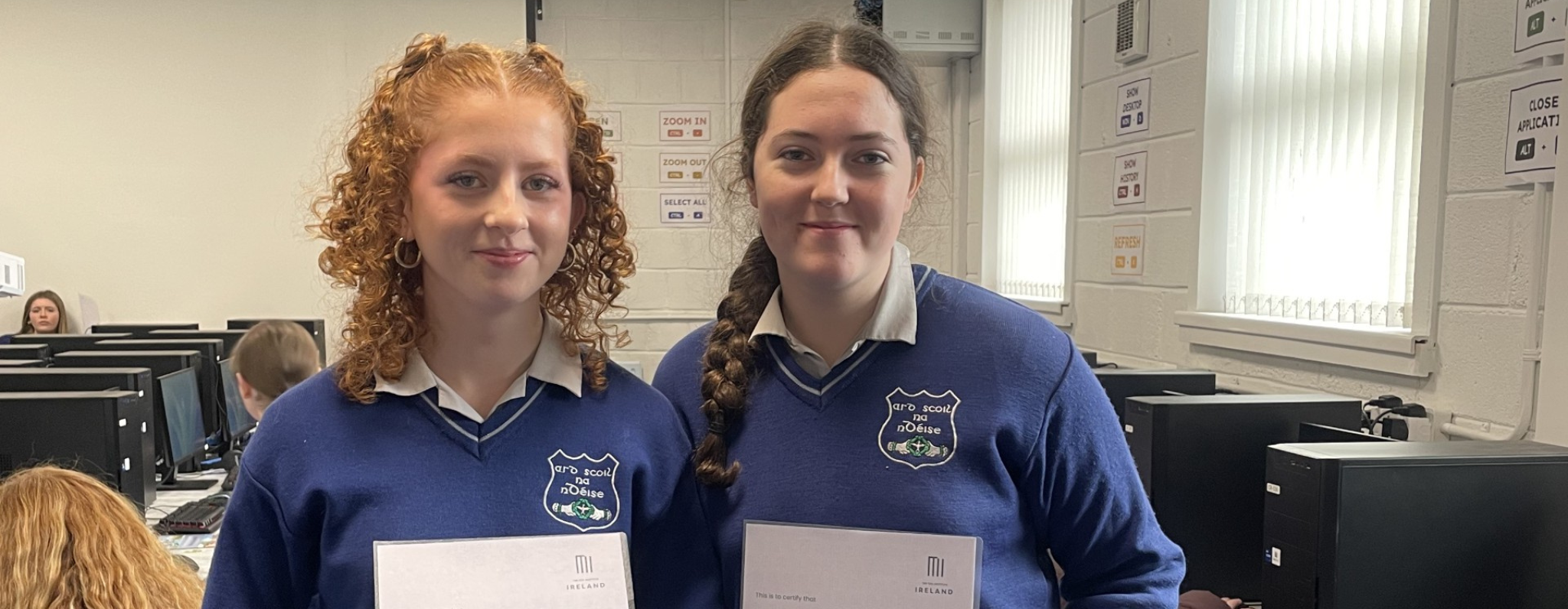
Online TEFL Course for Your Transition Year Programme
Read more →Internationally Accredited & Recognised



TEFL Institute Salary Calculator
Curious about your earning potential as an online English teacher?
Take our quick quiz to estimate your TEFL salary and see what you could earn!

Got Questions?
Get clear answers about TEFL courses, certification, teaching jobs, and everything in between.


The best Transition Year courses are those that engage students, support TY aims and provide clear outcomes. Popular choices include enterprise programmes, work experience, coding or media modules, outdoor education and accredited courses such as TEFL.
TEFL gives students an internationally recognised qualification, builds communication skills and encourages independence. It also complements existing TY options like mini‑company and work experience without adding heavy preparation loads for staff.
Many skills‑based courses focus on narrow competencies, such as basic coding or first aid. A TEFL TY course is broader: it covers language teaching, lesson planning, classroom management and cultural awareness, and leads to a widely recognised certificate.
Yes. Once students are old enough and meet local requirements, they can use their TEFL certificate to apply for teaching positions abroad, volunteer roles and online tutoring work, especially during gap years or while at college.
Absolutely. TEFL is designed to sit alongside other TY activities, not replace them. Students can complete the TEFL course while also taking part in Gaisce, mini‑company, work experience and creative projects.
The TEFL TY course is designed for mixed‑ability groups. Modules are clearly structured, with interactive content and quizzes that support different learning styles. Students can work at their own pace with light supervision from teachers.
Most schools allocate around one double period per week over a term or similar period. Because students have nine months’ access to the online content, schools can be flexible around trips, work experience and other events.
You can explore the TEFL Institute’s Transition Year pages for students and teachers, then contact the team at schoolelective@tefl.ie for group rates and implementation advice tailored to your school.
